Walk into pretty much any conversation about shilajit online and you'll notice something fast. It's almost always framed around men. Testosterone this, gym performance that, a guy holding up a jar like it's a trophy. Which is a little funny, honestly, because women have been quietly asking the exact same question in DMs and search bars for years now, just without nearly as much content actually answering it. So today, let's fill that gap the right way, with research that actually exists rather than another recycled listicle 🙋♀️.
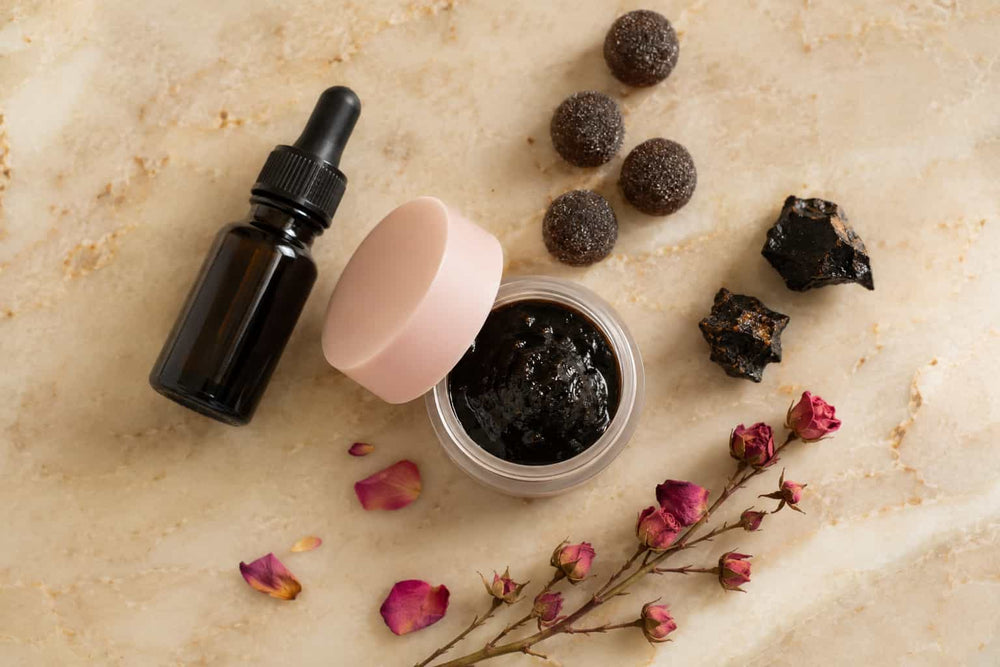
First, a little refresher for new readers. Shilajit is a sticky tar like substance, rich in minerals, formed over centuries as layers of organic plant matter are pressed under mountain rock most famously in the Himalayan range. Much of the long history of its use has been not for any single isolable effect, but rather more so as a tonic herb within Ayurvedic wellness traditions in order to promote more general vigor and resilience. So, when fulvic acid is one of the compound doing most of the heavy lifting in here, it seems to help your body absorb minerals better and work with the little energy factories inside your cells known as mitochondria. That's the same mechanism researchers point to whenever they talk about shilajit for women, so keep fulvic acid in your back pocket as the thing that actually matters more than the marketing on the label.
Now here's the part almost nobody says out loud in this space. The clinical research on shilajit has historically leaned heavily toward male populations, largely because early studies were funded around male reproductive and hormonal outcomes. That's not a conspiracy; it's just how a lot of supplement research funding has traditionally flowed. The good news is that's shifting, and a handful of genuinely solid, peer reviewed studies specifically involving women have started to appear over the last several years. They're fewer in number and generally smaller in scale than the male focused trials, and being upfront about that gap is the whole point of this article, but they're real, they're published, and they're worth walking through properly.
Let's start with skin, because this one surprises people. A clinical study looked at middle aged women taking oral shilajit over a 14 week period and used dermoscopic imaging along with gene expression analysis on skin biopsies to see what was actually happening beneath the surface. The results showed measurable improvements in skin microcirculation, meaning blood flow to the skin itself, along with activation of genes tied to microvascular function and the extracellular matrix, which is essentially the scaffolding that keeps skin firm and supported. Better circulation means more oxygen and nutrients reaching skin cells, which researchers linked to potential support for collagen related processes. It's a genuinely interesting finding, and it's exactly the kind of thing that gets buried under vague marketing phrases like "glow from within" without ever explaining the actual mechanism, so now you know the real one 💫.
Next, bones, and this is arguably the strongest and most rigorously designed study in the entire female specific shilajit research pool. A randomized, double blind, placebo controlled trial followed sixty postmenopausal women aged 45 to 65 with osteopenia, a condition where bone density starts thinning before it reaches full osteoporosis, over a full 48 weeks. Women were given either a placebo, 250 milligrams of shilajit extract per day, or 500 milligrams per day. The placebo group lost bone density across the study consistent with what happens as estrogen levels decline after menopause. In contrast, the groups administered shilajit demonstrated a dose dependent preservation of bone mineral density at both lumbar spine and femoral neck (the two sites most associated with fracture risk) together with reductions in markers of oxidative stress, inflammation and bone turnover. This is a big deal in the world of natural bone support research, both for its sample size relative to other shilajit trials and for running a full 48 weeks with proper blinding.
There's also a smaller but relevant study on reproductive aged women looking specifically at sexual function and quality of life, using a triple blind randomized design with oral shilajit tablets. Triple blind means neither the participants, the person administering treatment, nor the person analyzing results knew who got the real supplement versus placebo, which is about as rigorous as trial design gets. Early results pointed toward improvements in self reported sexual function and quality of life measures, though as with most of this research pool, the study population was relatively small, so it's a promising early signal rather than a settled conclusion.
Here's the honest summary, stated plainly instead of buried in fine print. Compared to the male research, where multiple large randomized trials have specifically targeted testosterone as a primary outcome, the female specific evidence base for shilajit benefits for women is still smaller, though it's genuinely growing and includes some well designed trials, including the longest duration shilajit study conducted in either sex. What this means practically is that if someone tells you shilajit definitively balances your hormones or reverses menopause symptoms, they're overstating what the current science actually supports. What the research does support, carefully worded, is that shilajit shows measurable, clinically documented effects on skin microcirculation, bone density preservation in postmenopausal women, and some early positive signals around sexual wellness and quality of life. That's a meaningfully different and more honest sentence than a sweeping hormone claim, and it's the one we're sticking with here.
Who needs to hit the brakes and consult a healthcare professional regarding incorporating shilajit in their regimen? So let's cut to the chase; this part is more important than almost everything I say here. Women who are pregnant or nursing should avoid shilajit altogether unless a physician specifically recommends otherwise, as there is currently no established human safety data for either group (and this is not just a theoretical concern; if the product is not tested rigorously, heavy metal or microbial contamination could reach a developing baby through the placenta or breast milk). Women with PCOS, thyroid, or new fertility issues should also check in with their doctor first before trying shilajit; the science covering its interplay with these hormone sensitive conditions is still limited enough to warrant a second set of eyes from someone who knows your whole picture. This isn't fear mongering; it's just the same standard we'd want applied to any supplement claiming even a modest hormonal effect. YMYL topics deserve exactly this level of caution and nothing less 🩺.
Assuming none of those flags apply to you, and you're a generally healthy adult curious about giving it a try, the next real world question is format. Do you go resin or gummies? Honestly, this comes down to lifestyle more than anything dramatic. Resin is the traditional, more concentrated presentation, a small pea sized amount typically dissolved in warm water or milk, which some women genuinely enjoy as a little morning ritual. Others find that faff annoying on a busy weekday and would rather grab a pre dosed shilajit gummies for women option that travels well, tastes pleasant, and takes the guesswork out of measuring. Neither format is inherently superior. The honest answer is that consistency beats perfection every single time, so pick whichever one you'll actually remember to take most days of the week rather than the one that sounds more impressive on paper.
Whichever format you land on, purity should be non negotiable. Look for a stated fulvic acid percentage rather than a vague "pure Himalayan" claim with no numbers attached, and check that the brand actually discloses testing for heavy metals and microbial safety, since shilajit forms inside mineral rich rock and can pick up contaminants if sourcing and processing aren't handled carefully. This is exactly the standard Harmain Global holds its shilajit range to, sourced from the Himalayan region with testing across fulvic acid content, heavy metals, and microbial safety before anything reaches your cart, so you're not left guessing what's actually inside the jar.
If you've read this whole thing, you now genuinely know more about the actual state of shilajit research for women than most of the internet currently offers, gaps and all, without anyone dressing it up as more settled science than it really is. That kind of honesty is rare in this space, and it's exactly the standard worth holding every wellness brand to, including this one. Curious to browse the best shilajit for women in Pakistan, with clear sourcing and testing info attached to every listing? See it here, or if you'd rather ask a real person a quick question about which format fits your routine before buying anything, learn more first. And if you're the bookmark it for later type, here's the direct link, no scrolling required: https://shop.harmainglobal.com
Either way, you're walking away from this with the actual research instead of another vague promise, and honestly, that's the whole point 🌿.